
Document Review: Teaching Council of Aotearoa New Zealand. (2025). Inclusive Teaching Practice Guidance [Draft].
Book Reviews: Vol 8, No 3 - November 2025
The Teaching Council of Aotearoa defines inclusion as recognising the open-ended potential of all ākonga and the implementation of practices that create learning environments free of racism, ableism, and discrimination. This definition provides the foundation for the Council’s current work to promote inclusion in practice. The Inclusive Teaching Practice Guidance [Draft] (ITPG) document, recently released by the Teaching Council of Aotearoa New Zealand in 2025 has been developed as a tool to support the development of inclusive teaching practices within early childhood, primary and secondary education. Furthermore, it is expected that the guide will provide an inclusive lens to how The Standards for the Teaching Profession (Education Council, 2017) are to be met in practice. The document is a call to action that aims to remove barriers to active participation across the education sector, and support kaiako in developing practices that “foster community and belonging, spark joy for learning and achieving, and are attuned and responsive to the needs of ākonga” (Teaching Council of Aotearoa New Zealand, 2025, p. 7).
Defining inclusion
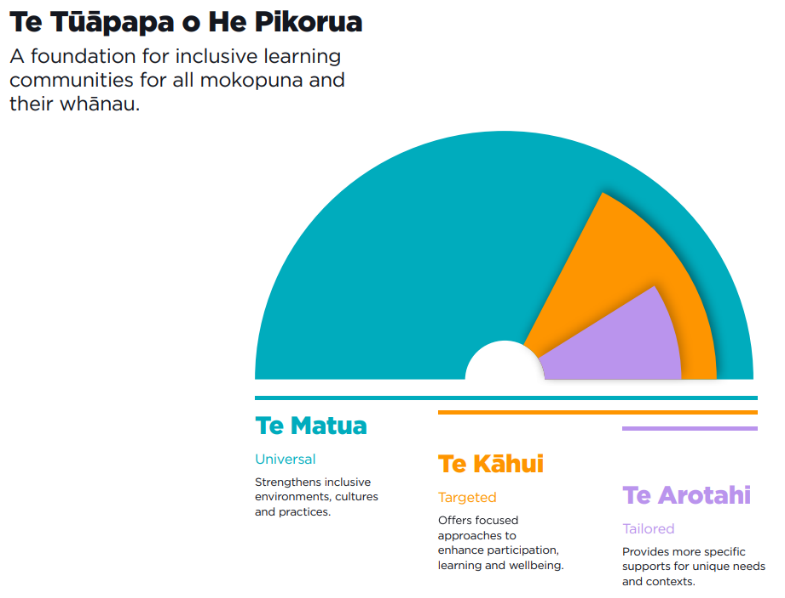
The New Zealand Disability Strategy 2016–2026 outlines the vision of “New Zealand as a non-disabling society, a place where disabled people have an equal opportunity to achieve their goals and aspirations, and all New Zealand works together to make this happen” (Office for Disability Issues, 2016, p. 6). Drawing on He Pikorua, the Ministry of Education’s learning-support delivery model, the ITPG views inclusion in the broadest sense as the removal of barriers to participation and the creation of inclusive environments for all learners, while recognising that adaptations in practice will be made to support those with specific needs and disabilities. This view is further informed by the Ministry of Education’s framework Te Tūāpapa o He Pikorua, which outlines three interconnected levels of practice. At the foundational level, Te Matua, kaiako work collaboratively to design and sustain an inclusive, learning-focused culture for all. Te Kahui, builds on effective practices by targeting approaches to support participation, whereas Te Arotahi, focuses on individual ākonga, refining practices to meet specific learning needs and strengthen inclusion.
Document structure
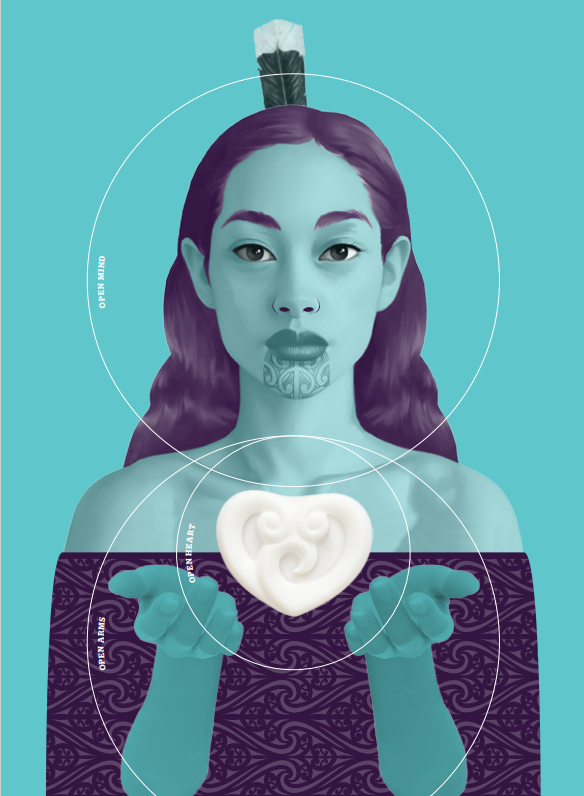
Divided into three main sections based upon the interwoven elements of an open mind, open heart, and open arms, the guide defines each element and prompts kaiako to reflect and inquire into teaching practices. Each section also provides a range of examples of quality practices and resources to support progression. The appendices provide enquiry focus plans and outline an Inclusive Practices Poutama to guide kaiako in identifying goals for further learning and development.
An inclusive practice framework
 Rouse (2008) outlines three key areas of inclusive teaching practice development as knowing, doing and
believing. The ‘knowing’ as professional knowledge of policy, learners and strategies that support best practice,
‘doing’ as the application of knowledge and working collaboratively to implement best practice, and ‘believing’ as
promoting strengths-based attitudes that all ākonga are capable of learning and that as Kaiako, we have the capacity
to make a difference in the lives of ākonga. Informed by the research of Martin Rouse, the ITPG outlines an
inclusive teaching framework of interwoven elements, an open mind, open heart and open arms.
Rouse (2008) outlines three key areas of inclusive teaching practice development as knowing, doing and
believing. The ‘knowing’ as professional knowledge of policy, learners and strategies that support best practice,
‘doing’ as the application of knowledge and working collaboratively to implement best practice, and ‘believing’ as
promoting strengths-based attitudes that all ākonga are capable of learning and that as Kaiako, we have the capacity
to make a difference in the lives of ākonga. Informed by the research of Martin Rouse, the ITPG outlines an
inclusive teaching framework of interwoven elements, an open mind, open heart and open arms.
An open heart
Aligned with an ethic of care, an open heart requires kaiako to consider how their own beliefs and experiences influence their thinking, assumptions and teaching practice. “An open heart is about genuinely embracing the notion that everyone matters and wants to do well and try their best” (Teaching Council of Aotearoa New Zealand, 2025, p.8). Reflective questions such as “what preconceived ideas do I have about ākonga, whānau, kaiako and their abilities? Am I open to recognizing and addressing my biases? How do I hold myself accountable for ongoing learning in this area?” (Teaching Council of Aotearoa New Zealand, 2025, p.11) prompt kaiako to reflect deeply on their own experiences, values and beliefs.
An open mind
An open mind can be described as the recognition that an individual’s values, experiences and beliefs are unique to them and that others may see the world from a different perspective. Fostering an open mind requires kaiako to seek new knowledge, ask questions and be curious about other ways of thinking, teaching and learning. The ‘open mind’ section of the ITPG prompts kaiako to consider questions such as “whose knowledge is valued? Who decides who gets support and what that support looks like? Am I providing equitable opportunities for all ākonga to succeed?” (Teaching Council of Aotearoa New Zealand, 2025, p.15). Practice examples provided support the elimination of barriers to participation and learning.
Open arms
Aligning with Rouse (2008) principle of doing, the open arms element refers to implementation of practices that hold high expectations for the learning outcomes of ākonga and “unlocking the promise in everyone” (Teaching Council of Aotearoa New Zealand, 2025, p. 8). The reflective questions in this section prompt kaiako to consider how they can improve teaching and work in equitable and socially just ways with questions such as “how can I better meet ākonga where they’re at? How well do I welcome and harness the knowledge of whānau, peers and other supporters to help grow my teaching practice and collaborate on teaching practice?” (Teaching Council of Aotearoa New Zealand, 2025, p.19).
Inquiry
The reflective questions and prompts, along with the practice examples outlined within the IPTG act as a starting point for improvement through individual and collaborative engagement in the process of teaching inquiry. Within the guide, resource links are given. One of these links is the Ministry of Education’s He Pikorua Our Practice Framework, which outlines an inclusive delivery model that focuses on inquiry and seven principles of practice that could be utilised to drive change and teaching practice improvement. An inquiry focus supports evidence informed teaching practice that draws on the knowledge and expertise of practitioners, and experience of whānau and ākonga, ultimately improving learning outcomes.
Final thoughts
In a recent Education Review Office (2022) report, it was highlighted that approximately a third of all kaiako lack confidence in creating inclusive environments and working with diverse ākonga across all education spheres. The Inclusive Teaching Practice Guidance serves as a tool to equip kaiako across early childhood, primary and secondary schooling to develop quality inclusive practice through the identification of internal and external barriers to inclusion and inquiry focused shifts in teaching practices. It is intended that kaiako and leadership across sectors engage actively with this guide to remove barriers to participation and ensure equitable opportunities for all ākonga.
References
- Education Council New Zealand. (2017). Our Code our Standards: Ngā Tikanga Matatika, Ngā Paerewa. https://teachingcouncil.nz/assets/Files/Code-and-Standards/Our-Code-Our-Standards-Nga-Tikanga-Matatika-Nga-Paerewa.pdf
- Education Review Office. (2022). Thriving at the centre: Ensuring better educational outcomes for learners with disabilities. Https://www.ero.govt.nz/our-research/thriving-at-the-centre-ensuring-better-educatioal-outcomes-for-learners-with-disabilities
- Ministry of Education. (2017). Te Whāriki: he whāriki mātauranga mō ngā mokopuna o Aotearoa: Early childhood curriculum. https://tewhariki.tiki.org.nz/
- Ministry of Education. (2020). Talking together: Te kōrerorero. https://www.education.govt.nz/our-work/information-releases/information-releases-from-2020/talking-together-te-korerorero/
- Ministry of Education. (2025). He Pikorua in action. https://www.hepikorua.education.govt.nz/resources/he-pikorua-in-action
- Ministry of Education. (2025b). Te Tūāpapa o He Pikorua: A foundation for inclusive learning communities for all mokopuna and their whānau. https://www.hepikorua.education.govt.nz/resources/te-tuapapa-o-he-pikorua
- Office for Disability Issues. (2016). New Zealand disability strategy 2016-2026. https://www.odi.govt.nz/nz-disability-strategy
- Rouse, M. (2008). Developing inclusive practice: a role for teachers and teacher education?. Education in the North.
- Teaching Council of Aotearoa New Zealand. (2025). Inclusive teaching practice guidance [Draft]. https://teachingcouncil.nz/assets/Files/Inclusive-Teaching-Practice-Guidance.pdf
How to cite this article
Woodgate, F. (2025). Document Review: Teaching Council of Aotearoa New Zealand. (2025). Inclusive Teaching Practice Guidance [Draft]. He Kupu, 8(3), 54-57.
